

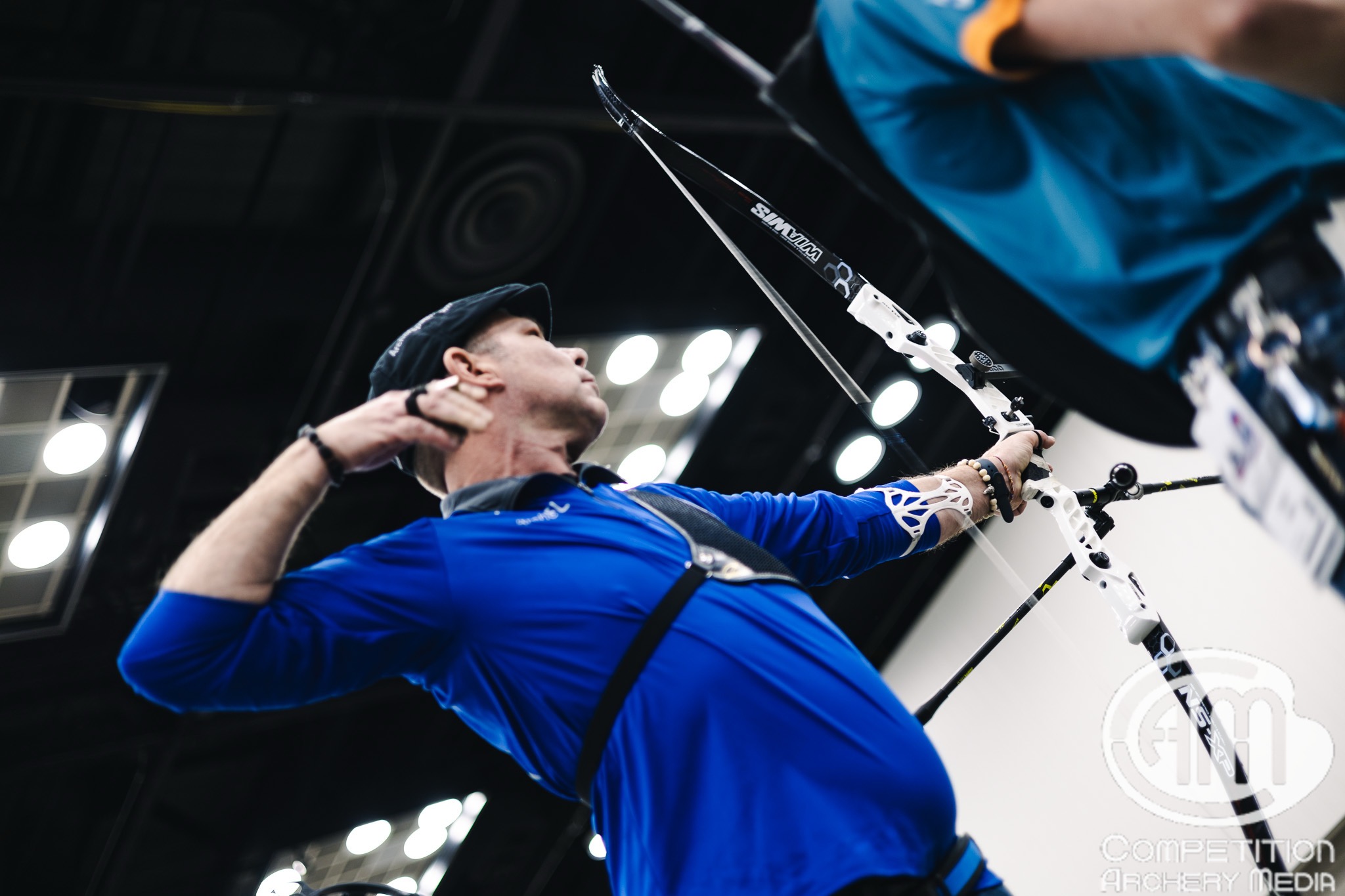
Every arrow is a new opportunity, regardless of what happened before it.
There is something remarkably honest about a bow. It doesn’t care about your last shot, your personal best, or where you stand in a competition. Whether you’re leading by ten points or struggling to keep your arrows in the gold, the bow simply responds to what you do.
Every time you draw the string, the bow responds to your alignment, the forces you apply, and the way you execute the shot.
The bow doesn’t know the score. But the archer does.
As archers, we naturally pay attention to results. We count our tens, track our averages, and measure our progress through scores and group sizes. These numbers provide valuable information about our development and help us establish goals. But they can also become distractions when we allow them to influence how we approach the next arrow.
Consider what happens after an unusually good end. Perhaps every arrow found the gold, and the score was better than expected. There’s a sense of satisfaction, maybe even excitement. Suddenly, the next end feels more important. We want to maintain that performance and avoid making a mistake.
The opposite can happen after a disappointing end. A few arrows land outside the gold, and frustration begins to develop. We start calculating how many points we’ve lost or how difficult it will be to recover. We may feel pressure to make up those points with the next few arrows.
In both situations, our attention has shifted away from the shot itself and toward managing the score.
This is where expectations can begin to influence our technique. We might hold longer while searching for a perfect sight picture, rush a release because we’re anxious about the result, or hesitate to commit to a shot that feels slightly unfamiliar. These reactions are often attempts to gain greater control over the outcome, but they can interfere with the skills we’ve worked to develop.
The irony is that trying to protect a good score can sometimes make it more difficult to continue shooting well.
The solution isn’t to stop caring about results. Scores are an important part of competitive archery, and pursuing improvement gives purpose to our training. The challenge is recognizing when the numbers are useful and when they begin competing for our attention.
During practice, reviewing results can help us identify patterns and evaluate progress. Between ends, we can reflect on our execution and recognize something worth improving. But once we return to the shooting line, the opportunity to influence our performance lies in what we do with the next arrow.
This distinction is an important part of developing consistency.
Consistency doesn’t mean every arrow will land in exactly the same place. It means building reliable habits that remain steady under changing conditions. Fatigue, distractions, and expectations may influence how a shot feels, but they don’t have to determine how we respond.
Some days, shooting feels natural. The bow settles comfortably, the release happens without hesitation, and the arrows seem to find their way toward the center. Other days, the same movements require more concentration. Both experiences offer opportunities to strengthen our patience, awareness, and trust in the skills we’ve developed.
A disappointing arrow can provide useful information without becoming a reason to question everything we’re doing. A perfect ten can be appreciated without creating pressure to reproduce it. Learning to respond thoughtfully to both is part of becoming a more consistent archer.
This lesson reaches beyond the shooting line.
In everyday life, we often carry the results of previous experiences into situations that have not yet unfolded. Success can create pressure to maintain a certain standard, while mistakes can leave us questioning our abilities. These experiences shape what we know, but they don’t have to determine how we approach the next challenge.
We can appreciate our accomplishments, learn from our mistakes, and still approach each new opportunity with curiosity and purpose.
Archery gives us a practical way to develop this mindset. The score provides a record of our performance, but it cannot tell us how the next arrow will fly. That depends on the choices we make and the skills we apply in the moment.
The next time you’re shooting, notice what happens in your mind after a particularly good or disappointing end. Are you thinking about the arrows already in the target, or are you preparing to give your attention to the one on your string?
There is value in knowing the score, but there is freedom in recognizing that the score does not shoot the next arrow.
The bow doesn’t know what you’ve already accomplished or what you’re hoping to achieve. It only knows what you do next.